

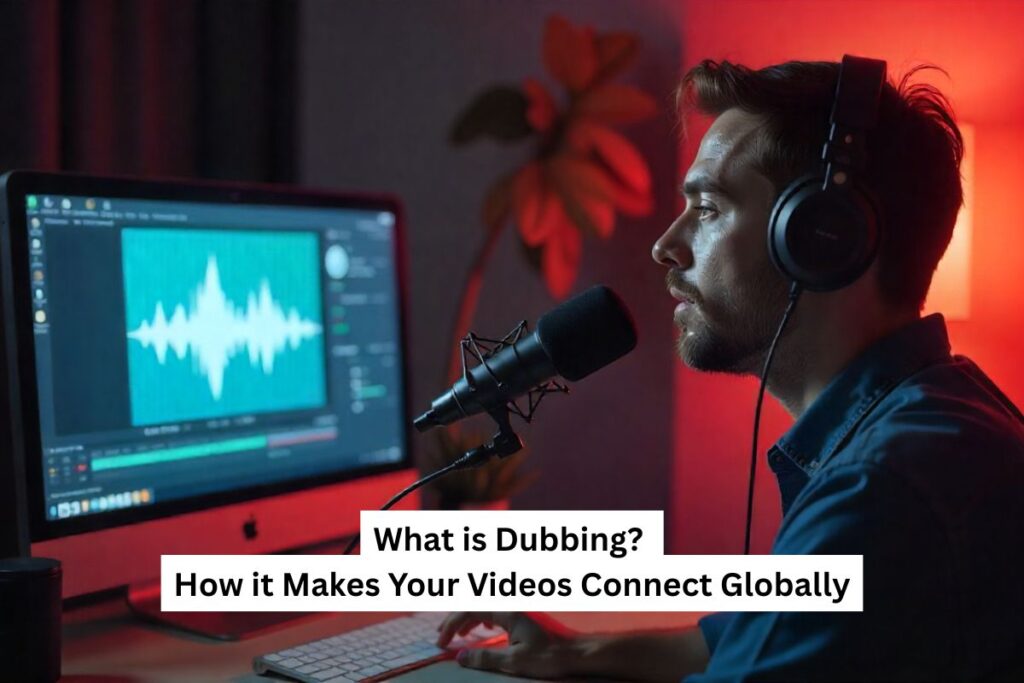
A man wearing headphones speaks into a microphone in a dimly lit room, using audio editing software on a computer.

What Is Dubbing?

How Global Brands Make Videos Sound Local Everywhere

A video that performs well in one market can lose impact in another if it feels translated or emotionally flat.

Dubbing helps brands, OTT platforms, educators, and businesses create videos that sound natural and engaging across languages—without forcing viewers to read subtitles or adjust to foreign accents.

In this guide, you’ll discover what dubbing really is, how it works, where it shines, and when it’s the smartest move for global video content.

What Exactly Is Dubbing? (And What It Is NOT)

Dubbing is when the original dialogue in a video is replaced with a new audio track in another language. Native voice actors record the audio, which is carefully synced with the on-screen lip movements and timing.

Unlike simple translation, dubbing focuses on:

  • Natural speech
  • Emotional delivery
  • Cultural relevance
  • Perfect audio–video synchronization

What Dubbing Is Not

Dubbing is often confused with other localization methods. Here’s a clear breakdown:

MethodWhat It DoesBest Use Case
DubbingReplaces original dialogue with synced local-language audioOTT, e-learning, marketing videos
Voice-overPlays narration over original audioDocumentaries, corporate videos
SubtitlingDisplays translated text on screenShort-form, budget-sensitive content

Key takeaway:

Dubbing makes the video feel like it was created in the target language.

Why Dubbing Matters for Global Video Content Today?

Modern audiences want videos that sound local, not translated. Dubbing makes that happen. It helps by:

  • Improving viewer engagement
  • Increasing watch time
  • Building brand trust
  • Making content accessible

Why subtitles aren’t always enough

  • Many viewers prefer listening over reading
  • Subtitles reduce emotional impact
  • Mobile viewers often watch without focusing on the text

With dubbing, your audience hears your story, not a translation.

Where Is Dubbing Used? (It’s Not Just Movies Anymore)

Once limited to Hollywood and TV, dubbing now powers digital, corporate, and social video content too.

Common use cases include:

  • OTT platforms (series, documentaries, films)
  • E-learning & EdTech courses
  • Corporate training & internal communications
  • Marketing & explainer videos
  • YouTube, Reels & Shorts
  • Government & public awareness campaigns

Videos reach the world—but dubbing makes sure they actually get understood.

How the Professional Dubbing Process Actually Works

High-quality dubbing follows a structured workflow. Skipping steps often leads to poor sync, unnatural delivery, or cultural mismatches.

1. Pre-Production

This stage defines quality.

  • Script adaptation (not word-for-word translation)
  • Time-coded scripts for accurate sync
  • Voice casting based on accent, tone, and age
  • Cultural and brand tone alignment

2. Production

Here’s where performance turns a script into emotion.

  • Studio-grade voice recording
  • Direction for pacing and emotion
  • Lip-sync and timing alignment
  • Multiple takes for accuracy

3. Post-Production

Post-production ensures the final output sounds polished.

  • Audio mixing and mastering
  • Noise reduction and clarity enhancement
  • Sync checks across scenes
  • Platform compliance testing

Result: Clean, natural-sounding localized audio that fits the video perfectly.

What Makes High-Quality Dubbing (And Why Poor Dubbing Fails)

Not all dubbing sounds professional. Viewers notice when something feels “off.”

High-quality dubbing includes:

  • Natural pacing that matches visuals
  • Clear pronunciation and consistent tone
  • Accent neutrality or intentional regional accents
  • Emotional delivery that fits the scene
  • Studio-grade audio with no background noise

Poor dubbing usually fails because of:

  • Literal translations
  • Incorrect timing
  • Non-native voice talent
  • Lack of emotional context
  • No quality assurance

Good dubbing disappears into the experience. Bad dubbing distracts instantly.

Cultural Localization—The Part Most Dubbing Guides Ignore

Accurate dubbing goes beyond language. It adapts culture, emotion, and intent.

Cultural localization includes:

  • Adjusting idioms and expressions
  • Adapting humor for local understanding
  • Matching regional communication styles
  • Aligning brand voice with local expectations

A phrase that works in one market may confuse or offend in another. Professional dubbing ensures the message lands correctly everywhere.

Dubbing vs Voice-Over vs Subtitling: How to Choose

Use this simple framework when deciding.
Choose ThisWhen You Need
DubbingMaximum immersion and emotional impact
Voice-overClear narration with original audio in background
SubtitlingFast, cost-effective multilingual access

Rule of thumb:

If emotion, storytelling, or learning outcomes matter, dubbing is the best choice.

Human Dubbing vs AI Dubbing—What Works and What Doesn’t

AI dubbing is growing fast, but it’s not a complete replacement.

AI dubbing works well for:

  • Internal content
  • High-volume, low-emotion videos
  • Rapid language scaling

Human dubbing is better for:

  • Marketing and brand videos
  • Training and education
  • OTT and entertainment content
  • Emotion-heavy storytelling

Many professional workflows now use hybrid models—AI for speed, humans for review, emotion, and quality control.

Common Dubbing Mistakes Brands Make

Avoid these before starting your project:

  • Using non-native voice actors
  • Skipping script adaptation
  • Ignoring lip-sync accuracy
  • Rushing production timelines
  • Delivering without platform checks

These mistakes reduce content quality and audience trust.

How to Prepare Your Video for Dubbing (Client Checklist)

Before contacting a dubbing partner, prepare:

  • Final video edit (locked visuals)
  • Clean, editable script
  • Target languages and regions
  • Platform or delivery requirements
  • Brand tone and voice guidelines

Preparation saves time, cost, and revisions.

When Should You Choose Professional Dubbing?

Professional dubbing makes sense when:

  • You’re expanding into new markets
  • Training global teams or learners
  • Launching multilingual campaigns
  • Publishing high-value video content

If your video represents your brand, quality dubbing is an investment—not a cost.

Bring Your Videos to Life Globally.

With VisionDub, our dubbing, voice-over, and subtitling services make sure it’s heard, felt, and remembered—across languages and platforms.

FAQs

What is dubbing in simple words?
Dubbing replaces original video dialogue with new audio in another language.
Dubbing replaces dialogue completely; voice-over plays over the original audio.
For engagement and emotional impact, yes—especially for long videos.
Timelines vary, but most projects take a few days to a few weeks.
AI helps with speed, but human review is still essential for quality.

Final Thoughts

Dubbing goes beyond words—it builds connection.
With professional dubbing, your videos work across countries and platforms while staying natural and powerful.
For global audiences who expect local authenticity, dubbing is essential.