

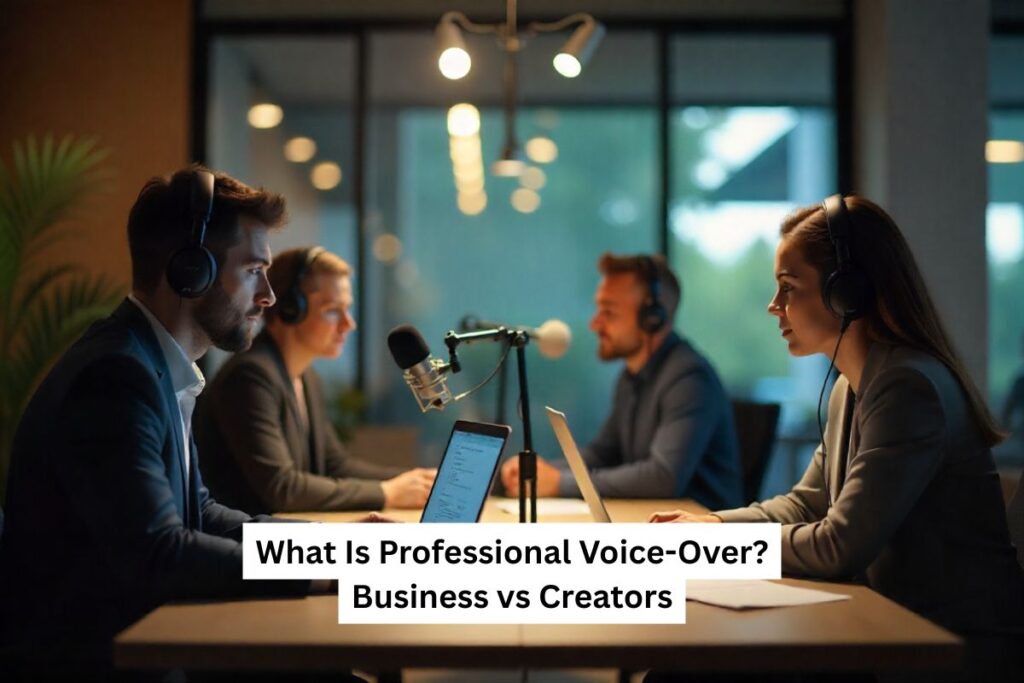
Four people in a podcast studio sit at a table wearing headphones and using microphones. Text overlay reads, "What is Professional Voice-Over? Business vs Creators."

What Is Dubbing?

Professional voice-over helps businesses deliver clear messages, train teams, and support marketing at scale. While creators focus on speed or personal style, businesses rely on professional voice-over for consistency, brand alignment, and scalable communication.

From explainers to IVR systems, professional voice-over helps your content sound polished wherever it lives. This guide shows what it really means for businesses and when upgrading makes sense.

It's Not Just a Voice—It's a Business Communication Tool

Professional voice-over is the art of turning a script into polished, clear audio with trained voice talent, studio recordings, and careful editing.

For businesses, voice-over is not about personality alone—it’s about reliability and purpose.

A professional voice-over typically includes:

  1. High-quality studio recordings
  2. Clear pronunciation and pacing
  3. Script interpretation (not robotic reading)
  4. Audio cleanup and post-production
  5. Consistency across multiple assets

For businesses, voice-over is part of the brand infrastructure, not a creative afterthought.

Businesses and Creators Use Voice-Over for Very Different Reasons

Creators and businesses often use the same term—voice-over—but expect completely different outcomes.

How businesses use voice-over

  1. To maintain a consistent brand voice
  2. To support marketing, sales, and training
  3. To scale content across teams and regions
  4. To meet quality and compliance standards

How creators use voice-over

  1. To express a personal tone
  2. To move fast with minimal setup
  3. To optimize for cost and flexibility
  4. To support individual content channels

Business vs Creator Voice-Over (Quick Comparison)

FactorBusinessesCreators
GoalBrand clarity & trustPersonal expression
Audio qualityStudio-gradeVariable
RevisionsStructured QA processInformal
Usage rightsCommercial licensingLimited
ScalabilityHighLow to medium

What Makes a Voice-Over "Professional" for Businesses?

A professional voice-over for business is defined by process, not just talent.

Key elements include:

  1. Trained or native voice talent matched to the audience
  2. Script adaptation for clarity and natural flow
  3. Professional recording environment (no background noise)
  4. Audio post-production (levelling, cleanup, mastering)
  5. Quality assurance and revisions
  6. Clear commercial usage rights

Without these elements, audio may sound acceptable—but it won’t perform reliably across platforms or campaigns.

Where Businesses Actually Use Professional Voice-Over?

From marketing to training, professional voice-over makes every business message sound polished and reliable.

Common use cases include:

  1. Brand and marketing videos
  2. Explainer and product demo videos
  3. Corporate training and e-learning
  4. IVR and customer support systems
  5. OTT ads and paid media campaigns
  6. Onboarding and internal communications

No matter the video type, the voice should be clear, confident, and match your brand’s tone—because audience trust depends on it.

Why Businesses Invest in Professional Voice-Over (The ROI Angle)

Businesses invest in professional voice-over because audio quality influences results.

Key benefits include:

  1. Stronger brand trust and credibility
  2. Higher viewer retention
  3. Clearer messaging and fewer misunderstandings
  4. Better conversion rates for sales content
  5. Improved learning outcomes in training
  6. Easier expansion into new markets

When audio sounds polished and natural, audiences focus on the message, not the delivery.

When DIY or Creator-Style Voice-Over Stops Working

DIY or creator-style voice-over often works early—but breaks at scale.

Signs it’s time to upgrade:

  1. Inconsistent voice across videos
  2. Poor audio quality is affecting credibility
  3. Negative feedback or low engagement
  4. Growing volume of content
  5. Expansion into new regions or languages
  6. Sales or training content is underperforming

At this stage, professional voice-over becomes a necessity, not a luxury.

Voice-Over vs Dubbing vs Subtitles: What Should Businesses Choose?

Each option serves a different business need.
FormatBest For
Voice-overCorporate videos, explainers, training
DubbingEntertainment, OTT, immersive localization
SubtitlesCost-sensitive or accessibility-focused content
Mixed strategyBusinesses combining methods by audience, platform, and goal
Businesses often use a combination, depending on audience, platform, and goal.

What Is Dubbing? A Complete Guide for Global Video Content

How to Choose the Right Professional Voice-Over Partner

For businesses, reliability matters more than speed alone.

Look for:

  1. Proven business and industry experience
  2. Access to native and trained voice talent
  3. Structured QA and revision workflows
  4. Scalability for ongoing content
  5. Multilingual and localization capability

A strong partner helps you maintain quality as your content grows.

Professional Voice-Over Is a Brand Asset, Not an Afterthought

Professional voice-over shapes audience perception of your brand, sometimes even before they see your visuals. When executed well, it builds trust, delivers clarity, and helps your business grow globally.

Voice is more than audio—it’s your brand’s first impression.

FAQs

What is professional voice-over in business?
Scripted audio recorded by trained or native talent for clear, consistent business communication.
Businesses need repeatable quality; creators need agility and style.
Yes. Studio-quality audio improves clarity, trust, and credibility.
When audio quality drops or content needs to scale across platforms or languages.
Native speakers deliver market-accurate audio without brand drift.

Planning global video content?

VisionDub delivers professional dubbing, voice-over, and subtitling for brands, OTT platforms, and businesses scaling across markets.