

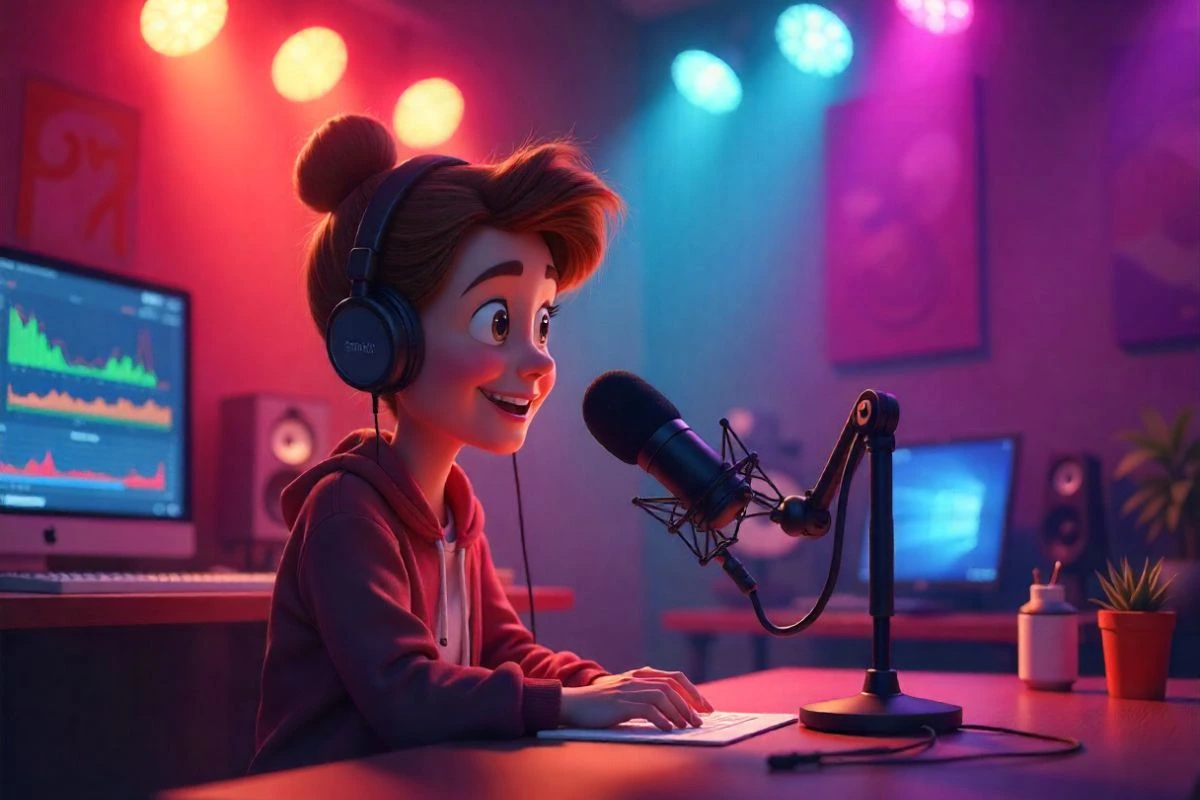
Animated films don’t rely on visuals alone to connect with audiences. Even before the final animation is ready, voice-over work shapes how characters feel, sound, and stay memorable. Most viewers never notice it because excellent voice-over is meant to blend in—quietly guiding emotion.
In animated storytelling, voices replace facial expressions and body language. They define a character’s personality, guide emotional timing, and help audiences connect and trust what they’re watching.
Key truth:
Your emotional response to an animated character is driven by sound before visuals.
In animation, voice actors don’t react to real sets or co-actors. They record their lines alone, usually before the final visuals are ready.
What sounds “natural” is carefully engineered.
Animated emotions are not spontaneous. They are planned, mapped, and refined.
Result: Clean, believable emotions that feel real — without sounding messy.
Many animated performances are built using multiple vocal layers.
One character can involve several voice passes working together.
Non-human animated characters avoid realism because it weakens the emotional connection.
Example:
A dragon sounds emotional because it carries human vocal traits — not because it sounds like a real creature.
Despite popular belief, many animated child characters are voiced by adults.
This is why animated kids often sound the same for decades.
Dubbing is not a word-for-word translation. It’s a process of cultural adaptation and emotional localization.
| Element | Original Version | Dubbed Version |
|---|---|---|
| Language | Source language | Target language |
| Humor | Original cultural context | Rewritten culturally |
| Lip Sync | Native alignment | Re-engineered |
| Emotional Tone | Original pacing | Localized pacing |
The same character may feel older, funnier, or more serious in different regions.
Voice directors quietly shape animated performances.
If a scene feels off, it’s usually a direction issue — not the actor.
Streaming platforms transformed animation production workflows.
Emotion still requires human voice actors.
Excellent voice-over fades into the story, helping you connect.
The best voice-over disappears — until it’s missing.
Animated films don’t just talk to audiences. They are carefully designed to be heard, felt, and remembered. Once you understand the craft behind animated voice-overs, you’ll realize:
You’ve been listening to animated films more than watching them all along.
Voice-over in animated films is the recording of vocal performances that bring characters to life. Actors deliver lines that are often enhanced in post-production to match emotion, timing, and animation cues.
Animated voice acting is intentionally exaggerated to compensate for the lack of real facial expressions and body movement, making emotions clear and engaging for viewers.
Many animated voices undergo pitch adjustments, layering, and sound processing to enhance clarity, emotion, and character identity without losing a natural feel.
Adult voice actors frequently voice child characters to maintain consistency, avoid legal restrictions, and prevent vocal strain in the character’s song recording sessions.
OTT platforms require faster production, simultaneous multi-language releases, and remote voice recordings, making dubbing workflows more complex and emphasizing high-quality localization.
Don’t just animate visuals—let voices create the magic. Our expert voice-over services deliver natural, emotive performances for films, OTT platforms, and global dubbing projects.