

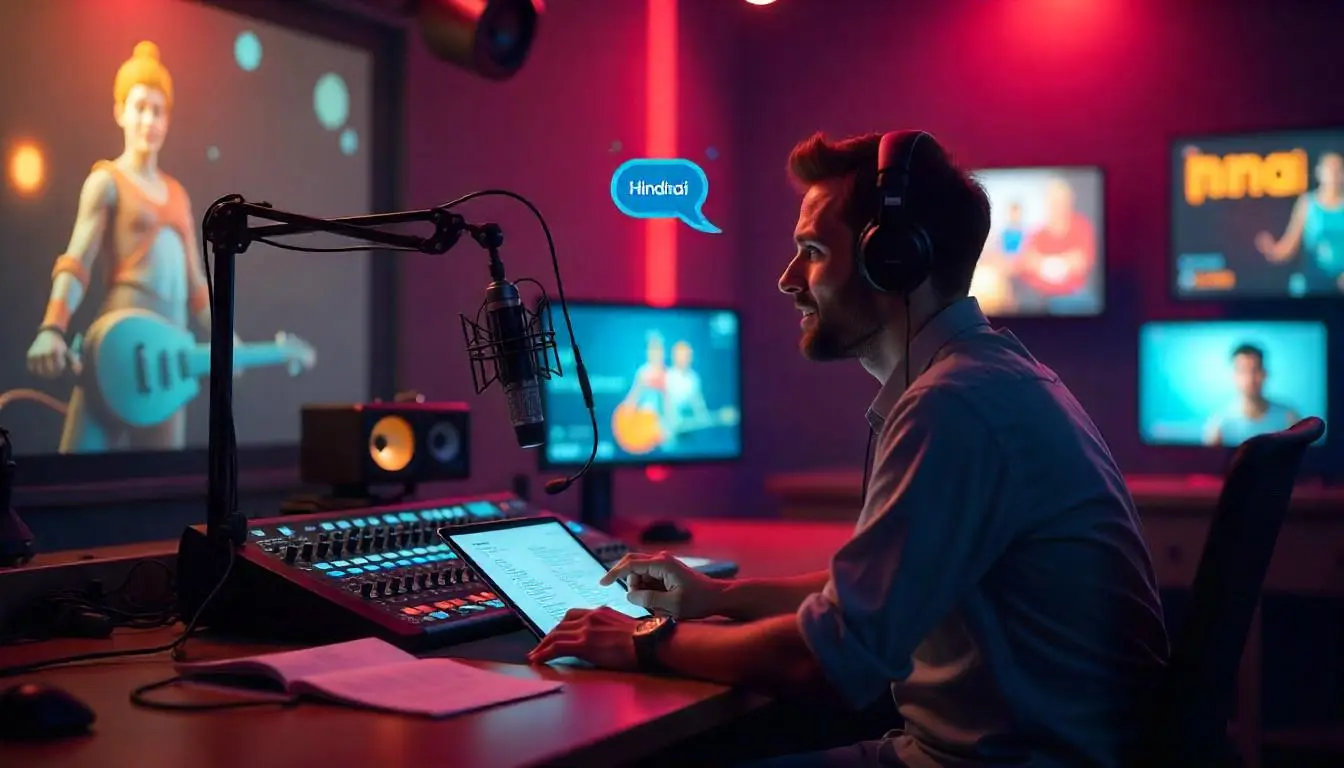
Dubbing is no longer just translation—it’s a smart blend of art and AI. From streaming shows to educational videos, dubbing uses professional voice-over talent and AI-assisted audio tools to bring content to life in multiple languages.
By capturing emotion and cultural nuance, dubbing keeps audiences engaged and entertained. Whether for OTT, gaming, or corporate training, AI-powered dubbing makes content accessible and immersive worldwide.
This blog dives into how dubbing works, the role of AI, and why it’s essential for global content creators.
Dubbing goes far beyond translating lines. It’s a step-by-step process designed to make shows, films, and training videos bring content to global audiences. From translation to lip-sync, voice-over, and final mastering, each stage ensures the story keeps its emotion, humor, and impact across languages.
Step-by-Step Dubbing Workflow:
| Step | Description | Key Focus |
|---|---|---|
| Script Translation | Translating content with attention to context, humor, and idioms | Cultural accuracy |
| Voice Casting | Selecting native voice actors matching the tone and personality | Authentic delivery |
| Recording | Studio recording or remote sessions | Clear audio, proper lip-sync |
| Editing & Mastering | Noise reduction, audio balancing, mastering | Consistency and quality |
| Quality Control | Final review for timing, clarity, and emotion | Viewer-ready content |
Why it Matters:
Great dubbing goes beyond words—it speaks the culture. What’s funny in English may confuse viewers in another language.
Key Elements of Cultural Localization:
Example:
Benefits of Cultural Localization:
Voice-over and dubbing work differently across industries. What works for a Netflix series won’t work for a corporate training video or an animated show. Understanding the specific needs of each content type helps creators deliver more engaging, professional, and culturally accurate audio.
OTT & Streaming:
Animation & Kids Shows:
Gaming & E-Learning:
Common Voice-Over Techniques:
Dubbing drives viewer engagement, retention, and revenue. Platforms that invest in professional dubbing—combining voice-over talent and AI tools—see clear, measurable gains in how audiences watch and interact with content.
Metrics to Track:
| Metric | Description | Why it Matters |
|---|---|---|
| Viewer Retention | % of content watched till end | Indicates engagement and localization effectiveness |
| Completion Rates | Number of episodes completed | Shows satisfaction with dubbed content |
| Subscriber Growth | New users from different regions | Measures market expansion impact |
Key Insights:
Modern dubbing relies on technology and AI tools to improve efficiency and quality.
AI & Machine Learning in Dubbing:
Pros of AI in Dubbing:
Limitations:
| Feature | AI Dubbing | Human Dubbing | Best Use Case |
|---|---|---|---|
| Emotion & Expression | Limited | High | Narrative-driven content |
| Turnaround Time | Very Fast | Moderate | Bulk content or repetitive lines |
| Cost | Lower | Higher | Budget-sensitive projects |
| Cultural Adaptation | Low | High | Idioms, humor, tone |
Ways to Make Dubbing Tangible for Readers:
Example:
Benefits of Interactive Content:
Dubbing is far more than just translating content—it’s an art and a science that combines cultural adaptation, technical expertise, and voice talent to deliver authentic experiences to global audiences. From OTT shows and animation to gaming and corporate training, high-quality dubbing increases viewer retention, engagement, and subscription growth.
Dubbing replaces the original audio entirely, while voice-over may overlay translated audio without replacing the original sound.
Depending on the length and number of languages, it can take from a few days (for episodes) to several weeks (for feature films).
It ensures that jokes, idioms, and references resonate with the target audience, increasing engagement.
AI can assist in repetitive or simple lines, but nuanced emotion and character depth still require human talent.
OTT & streaming, animation, gaming, corporate training, and e-learning all benefit from multilingual voice-over.
Our experienced dubbing studio helps studios, brands, and educators deliver multilingual content that resonates with viewers worldwide.